Common Music Promotion Mistakes: How to Fix Them
Common Music Promotion Mistakes: How to Fix Them
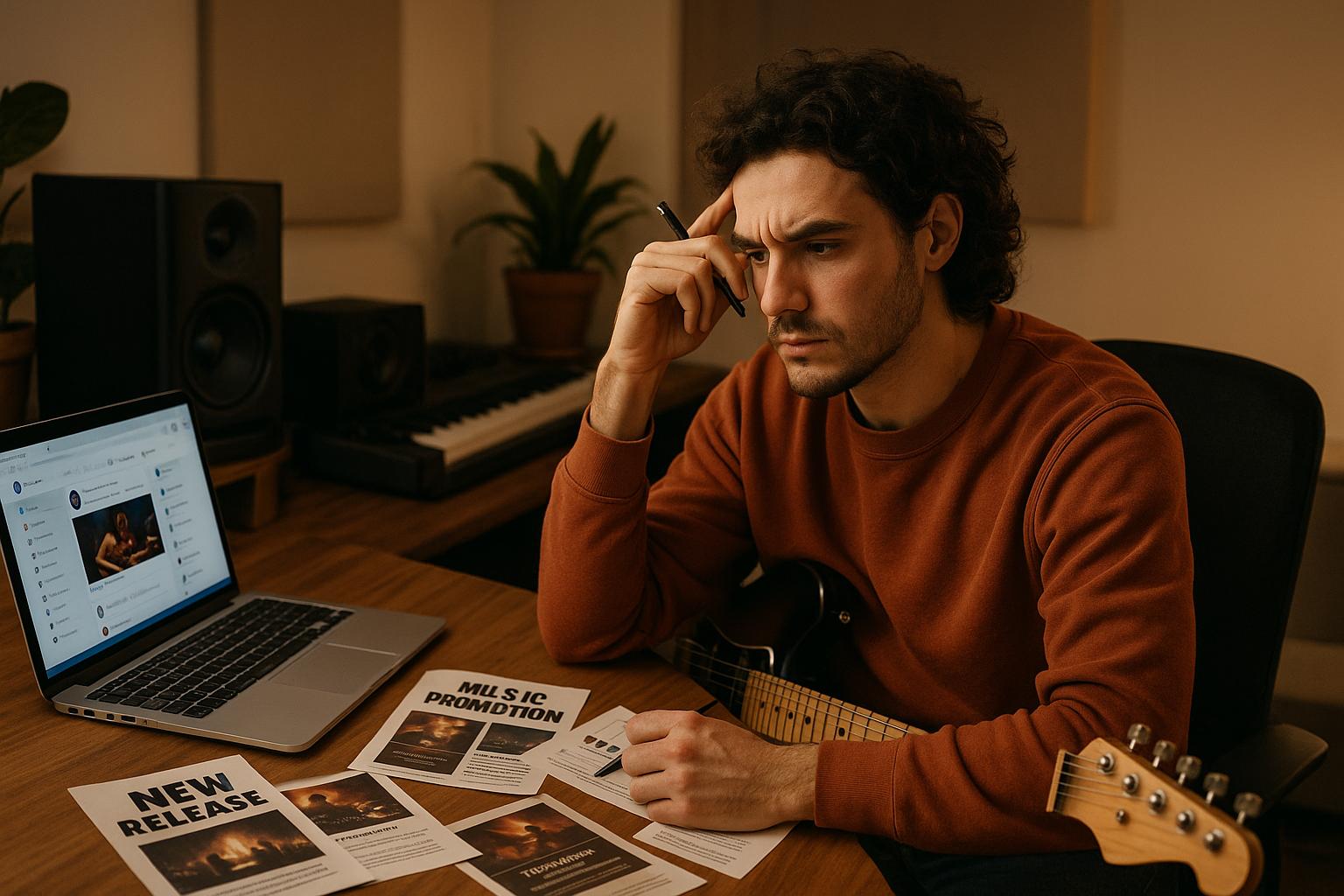
Standing out in today’s music industry is tough. Many musicians struggle with promotion because they repeat these five mistakes:
- Posting the same content on all platforms: TikTok, Instagram Reels, and YouTube Shorts require different styles to perform well.
- Irregular or low-quality posts: Inconsistent posting or bad audio/visual quality lowers engagement.
- Using outdated methods: Mass emails or generic "new song out now" posts don’t work anymore.
- Ignoring your audience: Not knowing who your fans are or what they like leads to missed connections.
- Skipping data analysis: Without tracking metrics, you waste time and money on ineffective strategies.
The Fix? Tailor content for each platform, post consistently, engage with your audience, and use tools like Vibedrop to simplify content creation and track results. Small changes can help you connect with fans and grow your streams.
Music Marketing Mistakes Every Artist Makes (And How to Fix Them!)
Using the Same Content Across All Platforms
After wrapping up a new track, you might think it’s smart to create one video, write one caption, and post it across TikTok, Instagram Reels, and YouTube Shorts. Sure, it feels efficient, but this cookie-cutter approach can hold you back.
Each platform has its own vibe, audience preferences, and algorithm quirks. What grabs attention on TikTok might flop on Instagram, and something that works on YouTube Shorts could feel misplaced elsewhere. By sticking to identical content, you miss out on connecting with the unique audiences that each platform offers. Musicians who adjust their content to fit each platform tend to see much better engagement.
How Each Platform Stands Out
TikTok thrives on content that feels raw and spontaneous. The algorithm loves quick, attention-grabbing videos. Think behind-the-scenes clips or spur-of-the-moment moments - they tend to click with TikTok users.
Instagram Reels leans toward polished, visually pleasing content. While it shares TikTok’s short-form format, Instagram users often expect a more curated and aesthetic approach. High-quality visuals and a polished vibe can go a long way here.
YouTube Shorts, on the other hand, is all about storytelling and discovery. It’s an entry point for viewers to explore more of your work, often leading them to your longer videos on the platform.
Beyond style, the metrics that drive success vary. TikTok focuses on video completion rates and early engagement, while Instagram Reels and YouTube Shorts prioritize their own unique signals. These differences highlight the importance of tailoring your content for each platform.
How AI Can Help You Customize Content
With these platform-specific demands, AI tools can simplify and speed up the process of adapting your content. For example, Vibedrop’s AI-powered platform allows you to upload your track once and automatically generates content tailored for TikTok, Instagram Reels, and YouTube Shorts.
The tool adjusts your music promotion to fit each platform’s style - capturing TikTok’s energetic, off-the-cuff feel, creating the sleek visuals Instagram users love, and crafting the narrative-driven content that works on YouTube Shorts. This not only saves you hours of work but also ensures your content resonates with each platform’s audience and algorithm.
Plus, Vibedrop’s auto-posting feature keeps your presence steady across platforms without the hassle of manual uploads. This gives you more time to refine your overall strategy and build stronger connections with your fans.
Posting Irregular or Poor-Quality Content
How often you post, and the quality of what you share, directly affect how algorithms rank your content and how your audience engages with it. If you post sporadically - say, disappearing for weeks and then flooding your feed with three posts in one day - or if your content feels rushed and unpolished, your visibility will take a hit.
Platforms like TikTok, Instagram, and YouTube reward creators who post consistently and maintain a certain standard of quality. When your posting is erratic, these platforms may assume your content isn’t worth prioritizing, meaning fewer people will see it. And let’s face it - if your visuals are blurry or your audio is off, even your most loyal fans are likely to scroll right past, no matter how great the song is.
Your audience also forms habits based on how often you post. If they’re used to seeing fresh content from you every few days, long gaps can make it seem like you’ve lost interest in engaging with them. This disconnect can be tough to repair once it sets in.
Creating a Regular Posting Schedule
To build a realistic and sustainable posting routine, start by assessing what you can handle without burning out. If you can only produce high-quality content twice a week, stick to that. It’s much better than overcommitting to daily posts and giving up after two weeks. The key is consistency, not quantity.
Try batch-creating content once or twice a week, so you always have something ready to post. Find a rhythm that works for you and stick with it for at least a month to see how it feels.
If you have a music release coming up, plan your calendar around it. For example, if your new single drops in three weeks, start ramping up your content now. Teasers, behind-the-scenes clips, and promotional posts can all be prepped in advance, saving you from last-minute stress.
Pay attention to how your audience reacts over time. Use analytics tools to track which days and times get the most engagement, and adjust your schedule accordingly. Once you’ve nailed your posting frequency, focus on improving the quality of each post.
Making Better-Looking and Better-Sounding Posts
Consistency is just the start - your posts also need to look and sound polished. You don’t need fancy gear to achieve this, but a few small upgrades can make a big difference. Good lighting and clear audio are game-changers. Natural light works great, but if that’s not an option, a simple ring light can do the trick. For audio, consider an external microphone - it’s a small investment that can make your music shine.
In music promotion, audio quality is more critical than video quality. Your fans are there for the music, so make sure it sounds clean and clear. If your recording space has a lot of echo, try hanging blankets or recording in a closet filled with clothes to dampen the sound.
When it comes to visuals, keep things simple and uncluttered. A plain background often works better than a busy one that distracts from your performance. If you’re filming yourself, make sure the lighting flatters you and the camera is positioned at eye level or slightly higher for a professional look.
Tools like Vibedrop can make this process even easier. Vibedrop’s platform automatically creates polished visuals tailored to your music. It analyzes your track and generates custom content that matches the energy and vibe of your song, so you don’t need to be a design expert or invest in pricey software.
The platform also helps with audio optimization, adjusting levels and formats to ensure your music sounds great, whether played through phone speakers or headphones. This takes the guesswork out of technical tweaks, freeing you up to focus on your creative work.
Finally, maintaining a consistent visual style across your posts helps establish your brand. You don’t need a graphic designer to achieve this - just stick to a few core elements like specific colors, fonts, or layouts. A cohesive look makes your content stand out and instantly recognizable in crowded feeds.
Sticking to Old Promotion Methods
A lot of musicians are still relying on outdated promotional tactics that just don’t cut it anymore. The music world has evolved drastically, especially with platforms like TikTok and Instagram Reels reshaping how people discover new tracks. Strategies like mass emailing or posting the same content everywhere simply don’t resonate in today’s digital-first environment.
The core problem with these old-school methods is they fail to match how modern audiences consume content. Today’s music fans crave connection and authenticity - they’re looking for engaging, personal interactions, not cookie-cutter promotional pushes. Using outdated strategies is like speaking a language your audience doesn’t understand.
Let’s break down some of these ineffective practices and why they’re no longer relevant.
Old Methods That Don't Work Anymore
Mass emailing blogs and radio stations has lost its edge. Many blogs have either shut down or scaled back their coverage, and radio doesn’t hold the same sway over music discovery as it once did. Flooding inboxes with generic press releases rarely leads to meaningful exposure anymore.
Posting the same content across all platforms is another misstep. Each platform has its own vibe, preferred formats, and algorithm rules. For instance, a three-minute music video might thrive on YouTube but flop on TikTok, where short, snappy clips dominate.
Chasing follower counts over engagement is a common mistake. A massive following means little if those followers aren’t interacting with your content. A small, engaged audience - fans who consistently like, comment, and share - is far more valuable. Engagement is what platforms reward, not just big numbers.
Overlooking short-form video content is a missed opportunity for many musicians. Platforms like TikTok, Instagram Reels, and YouTube Shorts have made short, authentic videos the go-to way to reach new listeners. Yet, some artists still think of video as too expensive or time-consuming to bother with.
Generic promotional posts like "new song out now" don’t generate much buzz. Fans want more than announcements - they want context. What’s the story behind the song? What was the creative process like? Without that personal touch, your posts risk getting lost in the noise.
If you want to truly connect with today’s fans, it’s time to leave these outdated methods behind.
New Ways to Connect with Fans
Storytelling is key in modern music promotion. Don’t just post your latest track - share the story behind it. What inspired the song? Did you face any challenges while recording it? Maybe there’s a funny or emotional moment tied to the process. These stories create emotional connections that make your music more memorable.
Interactive content thrives on today’s platforms. Ask your fans to pick between two song snippets, host live Q&A sessions, or create posts that invite comments and responses. Engagement is the name of the game - when fans interact with your content, algorithms push it to even more people.
Short-form videos tailored to each platform are the most effective way to promote your music right now. A 15-second TikTok of you creating a beat or experimenting with lyrics can introduce your music to thousands who might never have found it otherwise. Just make sure each video feels natural to the platform it’s on - don’t just copy and paste the same clip everywhere.
Behind-the-scenes content often outshines polished promotional material. Fans love seeing the raw, real process of making music. Share late-night studio sessions, moments where you nail a tough vocal, or even the bloopers and mistakes. This kind of authenticity builds deeper connections than overly produced content ever could.
Collaborating with other creators - not just musicians - can open up entirely new audiences. Partner with dancers, visual artists, comedians, or even food creators. These collaborations can introduce your music to people who might not have encountered it through traditional channels.
Platforms like Vibedrop make these modern strategies easier to execute. Vibedrop analyzes your music and generates platform-specific content, saving you hours of trying to figure out what works best for TikTok versus Instagram Reels. It also helps with storytelling by offering templates and caption ideas that go beyond basic promotional text, ensuring your posts are engaging and shareable.
The focus of these newer methods is on building genuine relationships with your audience. When fans feel personally connected to you, they’re more likely to share your music with their own networks. This kind of organic growth is perfectly suited to today’s fast-changing digital landscape.
sbb-itb-add310e
Not Knowing Your Audience or How to Engage Them
One of the biggest challenges for musicians is not fully understanding their audience. Many artists create music and then wonder why their promotional efforts don’t connect. The truth is, without a clear grasp of your audience’s preferences and habits, even the best promotional strategies can fall flat.
This disconnect can show up in different ways. You might post content that doesn’t resonate, use a tone that feels off, or focus on platforms where your audience isn’t active. If your posts consistently miss the mark, engagement drops, and social media algorithms may bury your content - leaving potential fans to scroll past without a second thought. Beyond just wasted effort, failing to understand your audience means missing out on genuine connections. And without those connections, it’s harder for fans to feel valued and seen. The first step to fixing this? Learning who your audience is and what they care about.
Learning Who Your Fans Are
Start with the tools you already have. Most social media platforms offer analytics that can give you a clearer picture of your audience. For example, Instagram Insights provides details like your followers’ age ranges, locations, and the times they’re most active. Similarly, TikTok Analytics can show which videos resonate the most and offer demographic breakdowns.
Pay attention to the posts that get the most comments, saves, or shares. This data reveals what your audience finds interesting. Maybe they love behind-the-scenes studio clips more than polished music videos, or perhaps they’re drawn to content where you talk about your songwriting process.
Your comments section can also be a goldmine of information. When fans share personal stories about how your music has impacted them, it’s a powerful reminder of the emotional connection you’ve created. These insights can guide you in crafting content that feels meaningful.
It’s also worth observing how other artists in your genre engage with their audiences. What’s working for them? What’s sparking conversations? This can help you refine your approach and even open doors for collaboration.
Lastly, don’t underestimate the value of direct feedback. Use Instagram Stories to run polls or ask questions, giving fans the chance to share their thoughts in real time. These small interactions not only deepen engagement but also provide actionable insights into what your audience wants to see more of.
Getting More Likes, Comments, and Shares
Once you’ve nailed down who your audience is, it’s time to create content that naturally invites interaction. Forget gimmicks - focus on sparking genuine conversations.
Ask thoughtful, specific questions that encourage fans to share their experiences. For example, you might ask what lyric of yours has stuck with them the most or what song inspired them to pick up an instrument. Responding to these comments quickly shows you’re listening and helps build stronger connections.
Create content that’s easy to share. This could be a relatable meme about the ups and downs of being a musician, a striking visual that sets a mood, or a snippet of music that captures a universal feeling. Shareable content can organically expand your reach.
Take advantage of platform-specific features to boost engagement. On Instagram, use interactive Story stickers like polls or quizzes. On TikTok, explore duet or stitch options to encourage fans to create alongside you.
Don’t forget to highlight user-generated content. When fans create something inspired by your music - whether it’s a cover, a dance, or even fan art - resharing it shows you value their creativity. Plus, it inspires others to engage with your work.
For a more personal touch, consider using platforms like Vibedrop’s private Discord community. This kind of exclusive space allows you to connect with your most dedicated fans on a deeper level. Share unfinished tracks, gather instant feedback, and build relationships that can turn casual listeners into lifelong supporters. It’s not just about growing your audience; it’s about creating a community that feels connected to your journey.
Not Using Data to Improve Your Results
Crafting tailored content strategies is just the starting point - leveraging data to refine your promotion is what sets you apart. Unfortunately, many musicians rely on guesswork when it comes to promoting their music. They post content, cross their fingers, and wonder why their reach keeps dwindling. Without tracking performance metrics, you risk wasting both time and money while missing valuable opportunities to connect with your fans.
Take Facebook, for example. By 2025, organic reach on the platform is expected to drop to a mere 0.09% - virtually nonexistent without paid promotion. If you're not using data to guide your efforts, your advertising budget can spiral out of control. Casting too wide a net with your targeting could lead to overspending by as much as ten times your intended budget.
The situation becomes even trickier when you factor in bots. In 2023, bots accounted for 47.4% of global web traffic, with up to 10% of Instagram's and Facebook's users being automated social bots. Without analytics to separate genuine interactions from fake ones, it’s easy to misinterpret your results.
Social media platforms are increasingly operating on a "pay-for-reach" model, prioritizing paid content over organic posts. If you don't use data to figure out what resonates with your audience, you could end up stuck in an expensive cycle with little to show for it. And with content disappearing quickly - just 18 minutes on Twitter, 5 hours on Facebook, and 21 hours on Instagram - every post counts. Without regular optimization based on performance insights, you're leaving opportunities on the table.
Now, let’s break down the key metrics that can help you make smarter decisions.
What Numbers to Watch and Why
Instead of drowning in endless metrics, focus on the ones that truly matter for building a lasting music career. For starters, prioritize your engagement rate over your follower count. A smaller, highly engaged audience is far more valuable than thousands of passive followers.
Understanding the difference between reach and impressions is also crucial. Reach tells you how many unique people saw your content, while impressions show the total number of views. If your impressions are high but your reach is low, it could mean the same users are seeing your content repeatedly.
Metrics like save rates and share rates offer even deeper insights. When someone saves your post, it signals that they find it valuable enough to revisit. Similarly, shares are a strong endorsement, showing that your content is worth recommending to others.
If you're directing traffic to your streaming platforms or website, click-through rates (CTR) are vital. Interestingly, email marketing far outperforms social media in this area, boasting an average CTR of 4.92% compared to Facebook's 0.07%. Tracking how your social media efforts drive email sign-ups can be a game-changer for building long-term fan relationships.
For video content, especially on platforms like TikTok and Instagram Reels, audience retention is key. If viewers drop off within the first few seconds, it might be time to rethink your opening hook. On the flip side, if they watch until the end - or even replay your video - it’s a strong sign that your content is hitting the mark.
Finally, align your posting schedule with your audience's peak activity times. For example, fans in Nashville might be active at different times than the general industry average. Using data to identify these peak moments can significantly boost your organic reach.
Armed with these insights, you can fine-tune your strategy. Here's how Vibedrop takes it to the next level.
How Vibedrop's Analytics Help You Make Better Decisions
While platforms like Instagram or TikTok provide basic analytics, they often lack the depth musicians need to create a winning promotional strategy. Vibedrop’s analytics tools, designed specifically for musicians, go beyond the surface to deliver insights that truly matter.
For example, Vibedrop tracks how different visual styles perform across TikTok, Instagram Reels, and YouTube Shorts. It provides unified data to show which formats generate the most engagement for your specific genre. Using AI-powered analysis, Vibedrop identifies patterns in elements like color schemes, video length, and posting times - taking the guesswork out of your strategy.
Even better, these tools help you distinguish between posts that attract casual listeners and those that build a loyal fanbase. This is essential when planning releases or tours, as it allows you to focus on content that fosters lasting connections rather than chasing fleeting views.
Perhaps the most powerful feature? Vibedrop tracks the entire fan journey - from discovering your music on social media to streaming your songs and signing up for your email list. This end-to-end view helps you see which efforts translate into meaningful fan relationships and actual music sales, rather than just vanity metrics.
To complement these analytics, Vibedrop also offers access to a private Discord community. Here, creators can exchange insights and compare performance with similar artists - all while keeping personal data private. And with email marketing delivering an average ROI of 4,200% compared to social media's 280%, Vibedrop ensures your social content drives email conversions effectively. Building an email list gives you a direct line to your fans, free from the whims of ever-changing algorithms.
Conclusion
Promoting your music doesn’t have to be complicated. Many of the common pitfalls musicians face - like recycling the same content across platforms, posting inconsistently, relying on outdated methods, ignoring their audience, or skipping data analysis - can be addressed with a thoughtful approach.
Start by customizing your content for each platform. TikTok, Instagram Reels, and YouTube Shorts each cater to different styles and user behaviors. A one-size-fits-all approach won’t cut it, as what works on TikTok might not resonate on YouTube or Instagram.
Consistency matters more than perfection. Posting regularly with quality content beats sporadic bursts of overly polished material. Fans appreciate knowing when to expect updates, and social media platforms reward creators who maintain a steady presence. This regularity is especially critical as older promotional strategies lose their edge.
Speaking of outdated tactics, generic posts and mass emails no longer capture attention. Today’s fans crave genuine interaction. They want behind-the-scenes glimpses, personal stories, and authentic moments - not just polished music releases. Building that connection is key to standing out.
Understanding your audience is another cornerstone of effective promotion. If you don’t know who your fans are, where they spend their time online, or what type of content they engage with, you’re essentially flying blind. The good news? The data is available - all you need to do is use it wisely.
By tackling these challenges - from tailoring content to engaging with your audience - you can elevate your promotional efforts. Tools like Vibedrop’s AI can simplify this process, generating platform-specific visuals, analyzing your music, and soon offering analytics to guide your decisions.
The music industry might be more competitive than ever, but it’s also full of opportunities. With the right strategies and tools, you can avoid these common missteps, connect with your audience, and focus on what you do best: creating amazing music. Let technology handle the rest.
FAQs
How can I save time while customizing my music content for different social media platforms?
To streamline your music content creation for different social media platforms, start by developing flexible core content that can be adapted easily. For instance, shoot vertical videos that fit seamlessly on platforms like TikTok, Instagram Reels, and YouTube Shorts. After that, adjust captions and visuals to match the tone and preferences of each platform's audience.
Leverage content scheduling tools to plan and automate your posts, ensuring a steady online presence with minimal effort. By focusing on repurposable content and simplifying your posting routine, you can expand your reach while keeping your workload under control.
How can I better understand and connect with my audience as a musician?
To forge a stronger connection with your audience, focus on creating genuine interactions. Share pieces of your journey - whether that's personal stories, behind-the-scenes glimpses, or insights into your creative process - on social media. These moments can foster a sense of openness and relatability. Beyond that, engage directly through Q&A sessions, live streams, or even in-person events like workshops or open rehearsals, giving people an opportunity to connect with you on a more personal level.
Listening to your audience is just as important. Pay attention to their feedback, preferences, and reactions - whether during performances or through online interactions. You can take it a step further by involving them in your creative process. Ask for their thoughts on song ideas or cover suggestions, making them feel like they’re part of your journey. These small, thoughtful actions can go a long way in building a loyal and engaged fan base.
Why is data analysis important for promoting your music, and which metrics should you focus on?
Using data analysis in music promotion is a game-changer. It gives you a deeper understanding of your audience - what they enjoy, how they interact with your music, and the online spaces they frequent. With this knowledge, you can craft strategies that truly connect with your listeners and make your promotional efforts more effective.
Some key metrics to keep an eye on include streaming numbers, social media engagement rates, and audience demographics. These insights help you decide the best times to post, identify which platforms deserve your focus, and fine-tune your content to match your audience’s preferences. In the long run, this approach can expand your reach and elevate your success as an artist.